
Best Patio Heaters 2025
A selection of the best types of heaters to warm your patio all year round
Having trouble finding the right outdoor heater for your needs? Take a look at our popular articles which aim to give you the answers you need quickly.
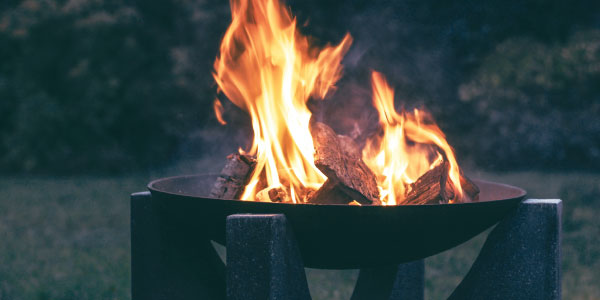


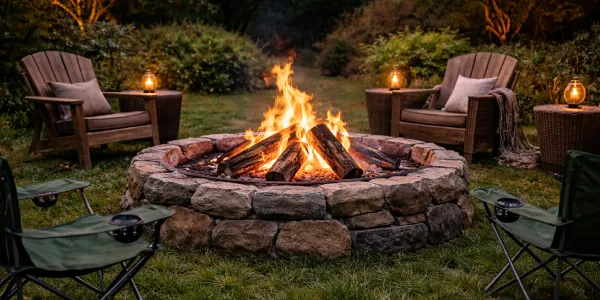
A fire pit can look good and still feel underwhelming. You light it, the flames are visible, the patio looks inviting, but once you sit down the heat just does not seem to reach you properly. That is a common frustration, especially with open backyard fire pits where warmth tends to rise faster than people expect.
If you are wondering how to get more heat from fire pit setups like yours, the answer is usually not to simply burn more fuel. Fire pit warmth depends on a few basic things working together: fuel quality, airflow, flame size, fire pit design, and where people are sitting around it. When one of those is off, the fire can look active without delivering much useful heat.
The encouraging part is that weak warmth is often fixable. A few practical changes can make a fire pit feel noticeably more effective without making it harder to manage or less safe to use.
If your fire pit feels weak, the best way to improve it is to build a cleaner, hotter burn and make better use of the heat it is already producing.
In other words, better fire pit heat output usually comes from a stronger burn and better heat direction, not just a bigger pile of logs.
Many fire pits lose heat in ways that are easy to miss. The most obvious one is that much of the warmth rises upward rather than outward. That means a fire pit can appear lively while people sitting nearby still feel chilly at knee level or across the seating area.
Fuel is another big factor. Damp wood, low-quality logs, or a fire that never really gets established can produce plenty of flame and smoke without producing much useful warmth. The fire looks busy, but the heat is weak because the burn is inefficient.
Airflow also plays a major part. A fire needs oxygen to burn hot. If vents are blocked, ash is building up, or logs are packed too tightly, the fire stays sluggish. That often leads to the familiar problem where the fire pit feels cold unless you stand very close to it.
Then there is positioning. Some people expect heat to travel much farther across a patio than it really does. An open fire pit usually has a limited fire pit heat radius, and that radius can shrink even more in windy or damp conditions. So the issue is not always that the fire pit is failing. Sometimes it is working within its normal limits, but the setup around it is not helping.
The best improvements come from working through the basics in a sensible order. Start with the fire itself, then look at the way the heat is being used around the patio.
If you want more warmth, start with the fuel. Dry seasoned hardwood usually gives better fire pit heat output than damp logs or lower-density wood that burns away too quickly. Wet wood wastes energy driving off moisture, which means more smoke and less usable heat.
For wood-burning fire pits, the difference between average wood and genuinely dry wood is often more noticeable than people expect. A hotter, cleaner fire throws more warmth outward and feels more stable once it gets going.
If you use a gas fire pit, the same principle applies in a different way. The burner needs to be clean and unobstructed so the flame can burn evenly. If the flame is weak, patchy, or partly blocked, the heat output suffers too.
A fire that cannot breathe will not produce strong heat. One of the most common reasons people feel disappointed by a fire pit is that the fire is being quietly starved of oxygen.
Clear excess ash from the base, make sure vents are open, and avoid packing logs too tightly together. A fire needs space between the pieces so oxygen can move through it. This is where good Fire Pit Airflow matters. Better airflow helps the fire burn brighter, hotter, and more consistently.
With gas models, airflow problems often show up when burner media is piled too heavily over the flame path. Lava rock, fire glass, or ceramic logs should enhance the look of the fire, not smother it.
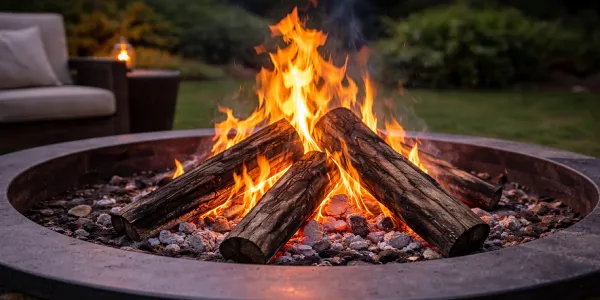
There is a difference between a larger fire and a hotter fire. Piling on more fuel too soon often creates a heavy, smoky burn that actually feels less effective because the fire never gets enough oxygen to establish itself properly.
Instead, build a hot core first. Let the fire catch well, then add fuel steadily so it keeps its structure and airflow. A smaller, well-burning fire usually gives more useful warmth than a larger fire that is struggling.
This matters because heat from a fire pit depends heavily on combustion quality. If the flames are active but the base is smouldering and smoky, a lot of potential warmth is being lost.
Sometimes the simplest answer is that people are sitting outside the most effective warming area. Every fire pit has a practical fire pit heat radius, and it is often smaller than expected, especially on cool evenings with moving air.
If you want to improve comfort, bring seating a little closer where safe to do so. Even moving chairs in by a small amount can make the fire feel much more effective. If the seating area is fixed, the fire pit may simply be too far away to warm people properly.
This is also why broad patios can make a decent fire feel weak. The open space allows warmth to dissipate before people benefit from it.
Wind strips heat away fast. It pushes flames sideways, cools the seating area, and breaks up the warmth before it can settle around the fire pit. That is one reason the same fire pit can feel excellent on one evening and disappointing on another.
If possible, place the fire pit in a more sheltered part of the patio or garden. Fences, walls, planting, and thoughtful layout can all help reduce heat loss without enclosing the fire pit unsafely.
Even a good fire can feel weak in open, breezy conditions. So if the fire pit feels cold, check the weather and exposure before assuming the fire itself is the problem.
Some fire pits are better at holding and radiating warmth than others. A very shallow design may look attractive but lose heat quickly. A low fire pit can also leave much of the warmth below seated body level, especially on larger patios.
You do not necessarily need a different unit, but it helps to understand the limits of the design you have. If the bowl is wide and open, more heat may rise upward than travel outward. If the burner or wood bed sits low, the warmth may not reach seating as well as expected.
This is where a realistic view of Fire Pit Heat Radius becomes helpful. Some fire pits are best for close conversation areas rather than wider entertaining spaces.
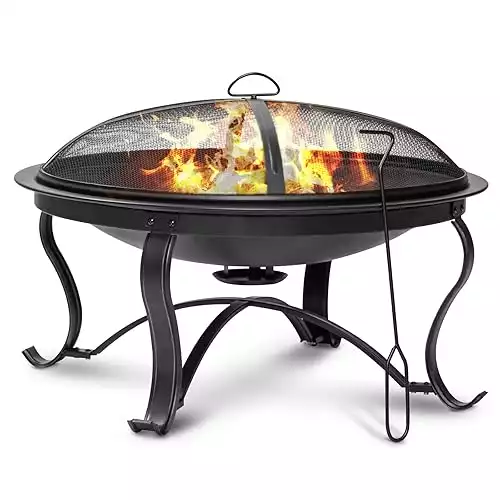
Durable steel fire pit with rust-resistant coating, improved airflow, ash plate for easy cleaning, and safety features like a spark screen and fire poker. Includes accessories and a 1-year warranty.
Weak warmth is often made worse by habits that seem sensible at first but actually hold the fire back. The usual pattern is trying to force more heat without improving the quality of the burn.
Most of these problems reduce efficiency rather than flame visibility. That is why the fire can still look acceptable while the patio never really feels warm.
People often focus only on flame size, but comfort depends just as much on where the heat actually reaches. A fire pit throws heat unevenly. There is usually a more effective zone quite close to the fire, then a sharp drop-off beyond that.
That drop-off is what makes some patios feel disappointing. The fire may be producing reasonable warmth, but the seating layout is outside the most useful range. Understanding the fire pit heat radius helps you judge whether the issue is the fire itself or simply the distance between the fire and the people using it.
It also explains why low temperatures, damp air, and wind make such a difference. They reduce how far the warmth travels before it becomes too weak to feel useful.
Trying to get more warmth should never mean pushing the fire pit beyond sensible limits. More heat is only useful if the fire remains stable, controlled, and safe for the space around it.
If increasing the fire causes instability, excess smoke, or unsafe flame behaviour, step back and adjust the setup rather than adding more fuel again.
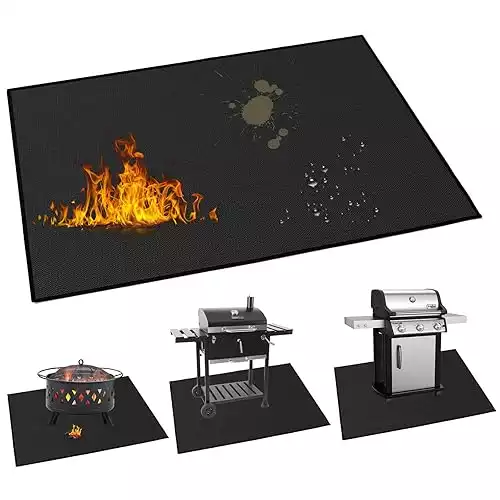
AiBOB grill mat withstands up to 1700°F, protecting decks and patios from heat, oil stains, and burns. Made of heat-resistant fiberglass and silicone, it's easy to clean and fits multiple grills.
The best long-term results usually come from small habits rather than one big change. Keep the fire pit clean, clear out ash regularly, protect it from rain, and store fuel properly. Those steps make it easier to build a hotter fire every time you use it.
It also helps to learn how your specific fire pit behaves in different weather. Some units perform well on still evenings but struggle in exposed spaces. Others need a slightly tighter seating layout to feel effective. Once you know those limits, it becomes much easier to get the most from the fire pit without frustration.
If you want to know how to get more heat from fire pit use, the answer usually comes down to burning better rather than simply burning more. Dry fuel, stronger airflow, a cleaner burn, and a realistic seating layout all make a noticeable difference.
If your fire pit feels cold, look at the whole setup rather than only the flame. In many cases, better fire pit heat output comes from a few simple changes that help the fire burn hotter and help more of that warmth reach the people around it.
A well-managed fire pit should feel welcoming, not decorative only. Once the burn quality and heat radius are working in your favour, the warmth is usually much better than before.
Because visible flame does not always mean strong usable heat. Poor fuel, weak airflow, wind, or sitting outside the main heat zone can all make a fire pit feel less effective than it looks.
Dry seasoned hardwood usually produces stronger and steadier heat than damp wood or softer logs that burn away quickly. Moisture content makes a big difference to heat output.
Focus on cleaner combustion. Better airflow, drier fuel, less ash build-up, and a more efficient fire structure often improve warmth more than simply adding more fuel.
That depends on the design, flame size, weather, and seating layout. Every setup has a practical heat radius, and beyond that point the warmth drops off quickly.
Yes. Wind is one of the biggest reasons a fire pit underperforms. It pulls warmth away from the seating area and can disturb the flame enough to reduce useful heat.

Sign up for free and get the hottest outdoor heater news direct to your inbox, you never know what you goodies you might find