
Best Patio Heaters 2025
A selection of the best types of heaters to warm your patio all year round
Having trouble finding the right outdoor heater for your needs? Take a look at our popular articles which aim to give you the answers you need quickly.
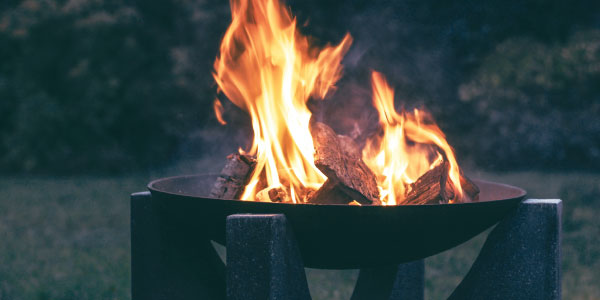


Rain causes more fire pit problems than people expect. Sometimes the issue is obvious, like soaked logs or standing water in the bowl. Other times the fire pit looks usable, but it still refuses to light properly because moisture is lingering where you cannot easily see it.
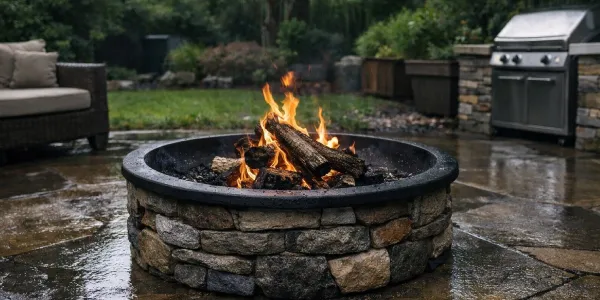
If your fire pit won’t light after rain, the problem is normally damp fuel, trapped moisture, blocked airflow, or water affecting the burner or ignition area. The fix is usually simple, but it helps to dry the fire pit properly and restart it in the right order.
If your fire pit won’t light after rain, start by removing any standing water, clearing out wet ash or debris, and using dry fuel only. On gas models, check that the burner and ignition area are dry and unobstructed before trying again.
Rain changes more than the surface of the fire pit. In wood-burning models, it can soak into leftover ash, dampen stored logs, and cool the bowl enough to make lighting harder. In gas fire pits, water can collect around the burner tray, ignition area, or decorative media.
That is why this type of wet fire pit problem often continues even after the weather has cleared. The fire pit may look ready to use, but the conditions inside it are still working against a clean, steady flame.
A damp firewood fire pit is especially common after changeable weather. Even slightly wet starter material can stop the fire from building enough heat in the first few minutes, and once that early stage fails, the whole fire tends to stall.
The best method is to dry, clear, and simplify the setup rather than trying to force the fire to start.
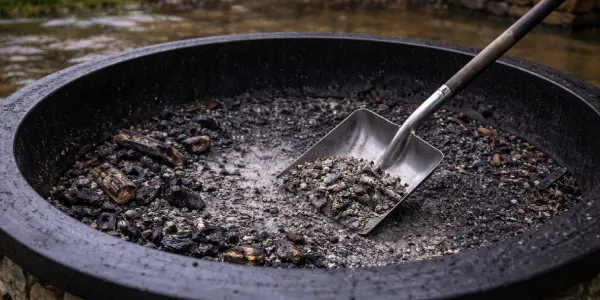
Start by removing anything that holds moisture. Tip out standing water if there is any, and clear away wet leaves, soggy ash, and leftover fuel.
For wood-burning fire pits, wet ash is often a bigger problem than people expect because it blocks airflow through the base. For gas fire pits, check that water is not sitting around the burner area or trapped under decorative media.
Do not rush this stage. A fire pit can look dry on top while still holding moisture underneath or around the ignition area.
If possible, leave it open to moving air or light sun for a while. Wiping out visible water helps, but proper drying usually takes a little longer than people expect, especially in cool or humid weather.
If you are lighting a fire pit after rain, the first materials matter most. Use dry tinder, dry kindling, and dry seasoned wood rather than hoping slightly damp logs will catch.
Once a fire is established, it can cope with less-than-perfect fuel more easily. At the start, though, damp wood wastes heat and usually creates smoke instead of a steady flame.
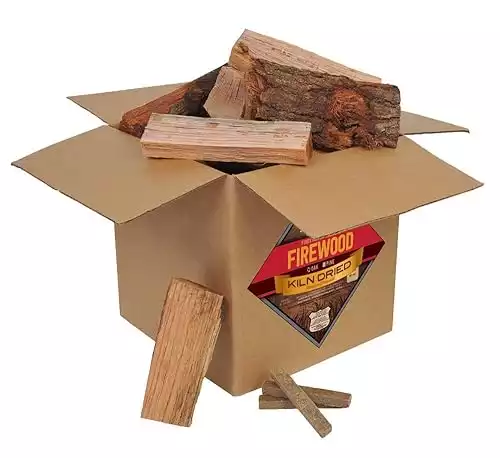
Smoak Firewood offers USDA certified, organic, kiln-dried premium oak, free from chemicals. Ready to burn, it’s perfect for heating and cooking. Delivered to your door, fits Solo Stove, and made in the USA.
After rain, smaller is better. Give the flame room to breathe and spread. For wood fire pits, stack the starter material loosely so air can move through it easily.
Do not overload the bowl too early. Heavy logs placed on a weak starter flame often smother it before it has built enough heat.
For gas fire pits, keep the burner path clear. If lava rock, fire glass, or ceramic logs are covering the burner too heavily, rearrange them before relighting.
Airflow is one of the main reasons a damp fire pit struggles. Wet ash, packed fuel, or blocked vents can all reduce oxygen right when the fire needs it most.
Make sure the base is clear, vents are open, and nothing is choking the flame path. If you need a broader process, this is where a full Fire Pit Troubleshooting guide becomes useful.
Once the fire pit is dry and cleared, try again using the proper lighting sequence. On gas models, avoid repeated attempts without pausing, especially if the burner is clicking but not lighting properly.
If it still refuses to light, there may be more than simple rainwater involved. That could mean burner blockage, ignition trouble, or fuel quality issues that need a closer look.
Most rain-related fire pit problems get worse when people try to rush the process. If the fire pit is still damp, more fuel or more relighting usually does not solve the issue.
A fire pit that has been left out in the rain should be restarted carefully. Wood-burning fire pits can produce heavy smoke and unstable flames when wet materials are involved. Gas fire pits need extra care because moisture and ignition issues can overlap.
If anything seems damaged after bad weather, stop and inspect it properly before using the fire pit again.
You cannot stop the weather, but you can make recovery much easier. Most repeat problems come from stored moisture, not from the rain itself.
Because surface dryness is not the whole story. Moisture can remain in ash, vents, burner media, or ignition components even when the top looks fine.
Yes. Damp wood is one of the most common reasons a fire struggles after rain. It creates smoke and weak flames instead of building heat quickly.
It can be, as long as the burner area is dry, the connections are sound, and there is no sign of gas leakage or damage. If ignition seems unreliable, inspect it before trying again.
That depends on how wet it got and how quickly it can dry out. If there is any doubt, dry it manually where you can and use only dry fuel when restarting it.
Clear out water and wet debris, let the fire pit dry properly, use dry starter material, and keep the setup simple. That gives the flame the best chance to establish itself cleanly.
If your fire pit won’t light after rain, the cause is usually moisture in the fuel, the ash, or the burner area rather than a major fault. Drying it properly and starting again with a simpler setup solves the problem more often than people expect.
The main thing is not to rush it. A fire pit that has been cleared, dried, and reset properly is far easier to light than one that is still carrying yesterday’s rain.



Sign up for free and get the hottest outdoor heater news direct to your inbox, you never know what you goodies you might find