
Best Patio Heaters 2025
A selection of the best types of heaters to warm your patio all year round
Having trouble finding the right outdoor heater for your needs? Take a look at our popular articles which aim to give you the answers you need quickly.
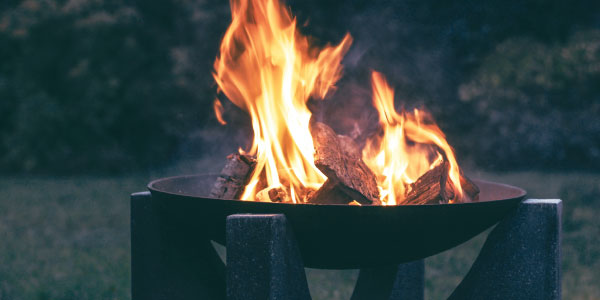


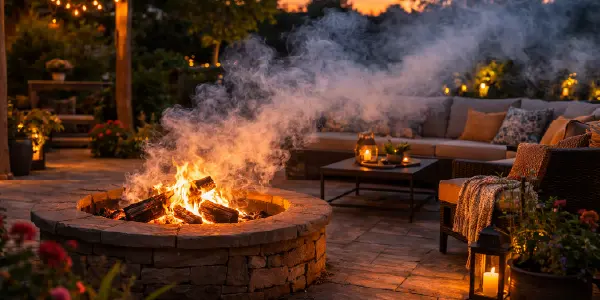
A smoky fire pit can quickly turn a pleasant evening outside into an irritating one. Instead of warmth and atmosphere, you end up with stinging eyes, clothes that smell of smoke, and guests shifting their chairs every few minutes.
That does not always mean there is something wrong with the fire pit itself. More often, the issue comes down to how the fire is burning, what fuel is being used, and how air moves through the fire bowl.
If your fire pit is smoking too much, the cause is usually incomplete combustion. In plain English, the fire is not getting the right balance of heat, oxygen, and dry fuel to burn cleanly.
Most excessive fire pit smoke comes from damp wood, poor airflow, or a fire that has been built too tightly.
When those factors are corrected, a fire pit usually burns much more cleanly.
Smoke is a sign that the fire is not burning all of its fuel efficiently. When wood heats up, it releases gases and vapors before the solid material is fully consumed. If those gases ignite properly, you get stronger flames and less visible smoke.
If they do not ignite properly, they drift away as smoke. That is why a fire can look active and still be producing more smoke than it should.
In many back gardens, the root cause is simple: the wood is too damp or the fire is not getting enough oxygen. But there are usually a few factors working together rather than one single problem.
Every wood fire depends on three essentials: heat, fuel, and oxygen. If one of those is limited, combustion becomes incomplete and smoke increases.
This is useful because it gives you a practical way to troubleshoot the fire. If your fire pit is smoking too much, ask three questions. Is the fuel dry enough? Is the fire hot enough? Is enough air reaching the flames?
Most smoke issues can be traced back to one or more of those points.
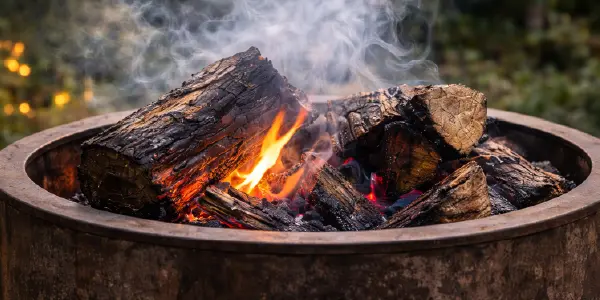
Damp wood is one of the most common reasons for heavy smoke. Before the wood can burn properly, the fire has to drive out the moisture trapped inside it. That process uses energy and lowers combustion temperature.
When the temperature drops, the gases released from the wood are less likely to burn cleanly. Instead, they leave the fire pit as visible smoke.
Seasoned firewood should generally be much drier than freshly cut wood. Dry hardwood tends to burn hotter, cleaner, and for longer. Wet logs, by contrast, often hiss, smoulder, and produce a thicker white-grey plume.
Even wood that looks dry on the outside may still hold moisture inside, especially if it has been stored badly or left uncovered.
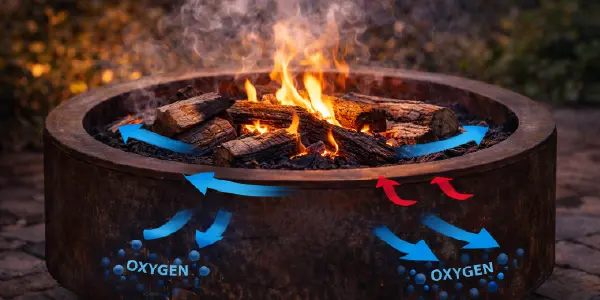
Air needs to move through the fire, not just around it. If logs are packed too tightly, oxygen cannot reach the hottest part of the flames and combustion becomes inefficient.
That is one reason loosely stacked fires often burn better than overloaded ones. A fire built with room for air gaps will usually establish itself faster and smoke less.
The fire pit design matters too. Some bowls have good airflow underneath, while others depend almost entirely on the way the wood is stacked. If ash has built up and blocked lower air openings, that can make the problem worse.
Outdoor fires do not burn in a controlled environment. Wind can either help or hinder the fire depending on how it hits the bowl. A gentle flow of air can support combustion, while erratic gusts can disrupt the flame pattern and push smoke sideways.
Placement also changes how the smoke behaves. A fire pit positioned near walls, fencing, or corners of a patio may create strange air currents that trap smoke or blow it back toward seating areas.
Cool, damp weather can make the problem feel worse as well, especially if the wood has absorbed moisture from the air before use.
If you want the quickest improvement, focus on the basics first.
Switch to dry, seasoned wood. If the current logs feel heavy, hiss in the fire, or produce steam, moisture is probably the main issue.
Rebuild the fire with more airflow. Leave gaps between logs so oxygen can move through the stack. A tightly packed pile often smokes more than a smaller, better-built fire.
Use less fuel at once. A smaller, hotter fire usually burns cleaner than an overloaded one that struggles to breathe.
Clear excess ash. Ash can restrict airflow from below, particularly in deeper bowls or designs with lower vents.
Adjust for wind direction. Sometimes the fire itself is burning reasonably well, but smoke is being pushed straight into the seating area by local airflow.
These steps do not require special equipment, and they solve many smoke problems straight away.
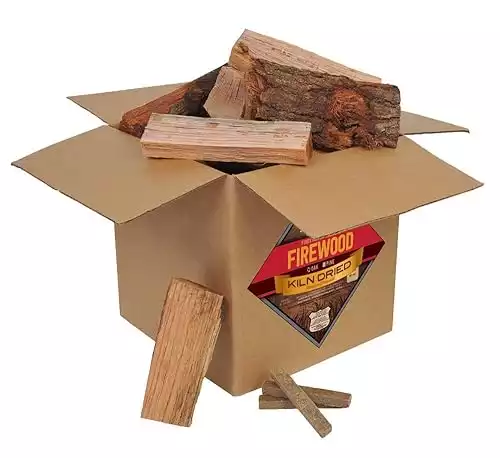
Smoak Firewood offers USDA certified, organic, kiln-dried premium oak, free from chemicals. Ready to burn, it’s perfect for heating and cooking. Delivered to your door, fits Solo Stove, and made in the USA.
Many smoky fires are caused by setup errors rather than poor fire pit design. The fire can only burn cleanly if it is given the right conditions from the start.
A cleaner fire usually begins with a smaller, hotter base and fuel that is actually ready to burn.
The colour of the smoke can give clues about what is happening in the fire pit. Lighter white or pale grey smoke often points to moisture, especially early in the burn. Darker grey or black smoke usually suggests incomplete combustion, poor airflow, or unsuitable fuel.
This is not an exact diagnostic tool, but it can help you narrow the problem down. If the smoke stays heavy and dark even after the fire is well established, the fire is probably starved of oxygen or overloaded with fuel.
Not all firewood behaves the same way. Hardwood species usually burn more steadily and with less smoke once properly seasoned. Softwoods can be useful for starting a fire, but resin-rich wood often burns faster and can produce more smoke and sparks.
That does not mean softwood should never be used. It simply means it tends to be less forgiving if airflow or moisture conditions are already poor.
Excessive smoke is not only unpleasant. It can also signal that the fire is burning inefficiently and producing more airborne particles than it should. That matters for comfort, nearby neighbours, and safe use of the fire pit in a garden setting.
If the fire pit is smoking heavily, avoid placing it too close to seating, doors, windows, or overhanging structures. Smoke can drift unpredictably, especially on still evenings or in enclosed-feeling garden layouts.
The best way to avoid a smoky fire pit is to make good burning conditions routine rather than trying to rescue a poorly built fire every time.
Once those habits are in place, smoke problems become much less frequent.
Fires often smoke more during the early stage because the wood is still heating up and releasing moisture and gases before the burn becomes fully established. If the smoke reduces as the fire gets hotter, that is fairly normal.
Yes. Wet wood is one of the most common causes of heavy smoke because the fire must evaporate moisture before the wood can burn efficiently. That lowers combustion temperature and increases visible smoke.
It often feels that way because of shifting airflow and seating position rather than anything personal. Wind direction, body placement, and patio layout can all influence where smoke drifts.
No. They can reduce smoke when used correctly, but they still depend on dry wood, proper airflow, and sensible loading. Poor fuel can still create noticeable smoke.
Firewood should be properly seasoned and dry enough to burn cleanly. Exact moisture levels vary, but in practical terms it should feel relatively light, sound sharper when knocked together, and not hiss or steam in the fire.
If your fire pit is smoking too much, the cause is usually not mysterious. Most smoke problems come from damp fuel, weak airflow, overloaded fires, or environmental conditions that disrupt combustion.
The quickest improvements usually come from using drier wood, building the fire more openly, and clearing anything that blocks airflow. Those changes make the fire hotter, cleaner, and far more pleasant to sit around.
A fire pit does not need to be perfectly smokeless to work well, but with the right setup it should burn with far less smoke than many people assume.

Sign up for free and get the hottest outdoor heater news direct to your inbox, you never know what you goodies you might find