
Best Patio Heaters 2025
A selection of the best types of heaters to warm your patio all year round
Having trouble finding the right outdoor heater for your needs? Take a look at our popular articles which aim to give you the answers you need quickly.


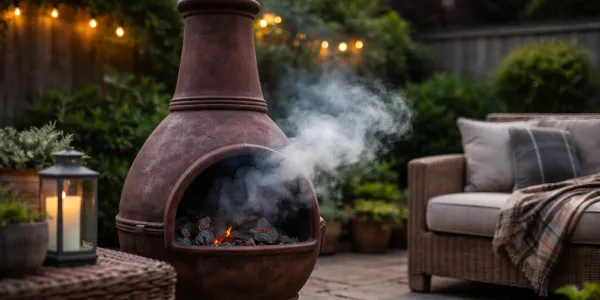
A chimenea should send smoke upward through the neck and out above head height. When that does not happen, the whole point of using one starts to fall apart. Instead of a warm, contained fire, you end up with smoke drifting back across the seating area, into doors and windows, and straight into people’s faces.
This kind of chimenea smoking problem is usually caused by poor draft. That can happen because the fire is too cool, the wood is too damp, airflow is blocked, or wind is pushing smoke back toward the patio.
The good part is that most chimenea smoke problems are fixable without replacing anything. Once you understand how the fire is meant to draw, the cause is usually easier to spot.
If your chimenea is smoking back into your patio, it usually means the fire is not drafting properly.
Start with dry wood, clear out excess ash, and build a hotter starter fire before looking for bigger problems.
A chimenea works by pulling air in through the front opening and pushing hot smoke up through the neck and chimney. When that upward pull is strong, smoke rises as it should.
When the draft is weak, smoke no longer moves cleanly through the chimney. Instead, it can spill from the front opening and drift across the patio. That is why chimenea smoke coming out front is usually an airflow problem rather than just too much smoke.
Several small issues can cause it:
In other words, a chimenea airflow problem often comes down to heat, oxygen, and placement all working against each other at the same time.
Even the best chimeneas can have smoking problems, so before changing everything at once, work through the basics in order. That usually tells you where the problem is.
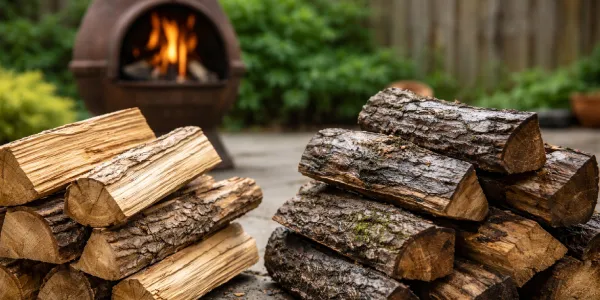
Wet wood is one of the biggest causes of a chimenea smoking problem. It burns at a lower temperature and creates heavier smoke, which makes it harder for the chimenea to draw properly.
Good firewood should feel dry, not damp or freshly cut. If logs hiss, steam, or smoulder more than they flame, the fuel is likely part of the problem.
Smaller dry logs are often easier to manage in a chimenea than oversized pieces that crowd the chamber.
Too much ash can choke the fire from below. A chimenea needs space for air to move around the base of the fuel bed. If that intake is restricted, the fire burns lazily and produces more smoke.
Once the chimenea is completely cool, remove built-up ash and check that the inside is not clogged with debris. Also look up into the neck for soot or obstructions.
A minor blockage is enough to create a noticeable chimenea draft issue, especially during startup.
A lot of people load a chimenea too heavily at the start. That usually creates a smoky, slow-burning fire rather than a clean hot one.
Begin with dry kindling and a modest fire. Let it burn long enough to warm the flue before adding larger logs. Once the chimney section is hot, the draft should improve and smoke should reduce.
The goal is not a huge fire immediately. It is a steady fire that establishes upward pull.
Logs that are stacked too tightly or pushed too far forward can interfere with airflow. That encourages chimenea smoke coming out front because the fire cannot breathe properly.
Keep some space between pieces of wood. The flames need room to rise through the middle of the fire, not fight through a packed mass of fuel.
With smaller chimeneas especially, less wood often works better than more.
If the chimenea is sitting in a corner, close to a wall, or in a spot where wind funnels across the patio, the draft can be disrupted. Smoke may be pushed back down or forced out through the front opening.
Try to place the chimenea in a more open position with safe clearance around it. Even moving it a short distance can improve airflow.
If the problem only happens on breezy days, the weather and placement may matter more than the fire setup itself.
Related: How to maintain & cure your clay chimenea.
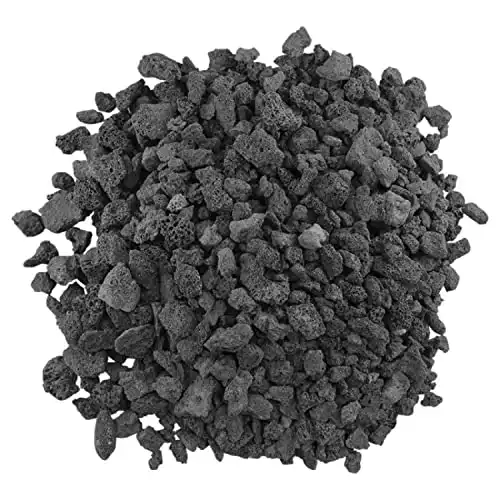
Durable 1/2”-1” lava rocks for fire pits, chiminea, bowls, and fireplaces. Ideal as a filler to cover gas pipes, withstand extreme heat, and enhance designs with fire glass. Great for landscaping too.
When a chimenea starts smoking, it is easy to respond in the wrong way.
The most common mistake is adding more wood too soon. That often makes the fire cooler and smokier, not stronger. Another is assuming the chimenea is faulty when the real issue is damp fuel or poor startup technique.
Most smoke issues come from setup rather than from the chimenea itself.
Wind does not always help smoke move away. In some patio layouts, it does the opposite.
Air can bounce off fences, walls, sheds, or the house and create swirling currents around the chimenea. That disturbed airflow can interrupt the natural upward movement through the chimney and push smoke back toward the opening.
This is why a chimenea may behave well in one part of the garden and badly in another. If the same unit burns cleanly after being moved, placement was likely a major factor.
Smoke blowing back across the patio is not just annoying. It is also a sign that the fire is not burning as cleanly as it should.
If smoke is moving into seating areas, doors, or windows, stop and correct the setup rather than trying to sit through it. Poor combustion also means more soot and residue building up inside the chimenea over time.
If the smoke is consistently blowing toward the house, extinguish the fire and reassess the location.
Most ongoing smoke issues can be avoided with a few simple habits.
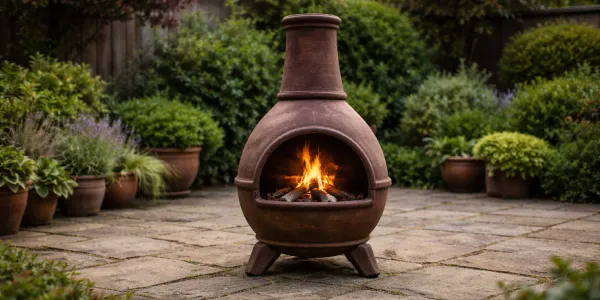
Use dry wood, clean out ash regularly, and avoid overfilling the fire chamber. Start small, let the flue heat up properly, and pay attention to wind direction before lighting.
Those steps go a long way toward preventing another chimenea airflow problem.
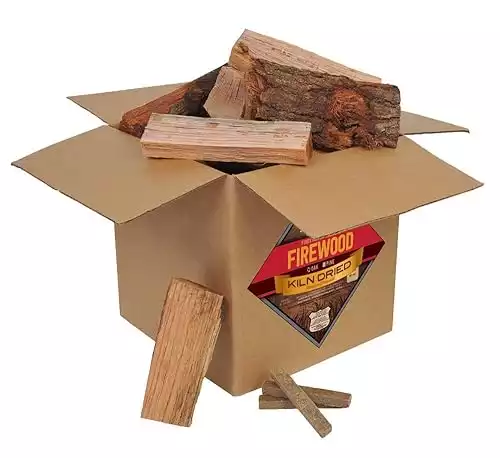
Smoak Firewood offers USDA certified, organic, kiln-dried premium oak, free from chemicals. Ready to burn, it’s perfect for heating and cooking. Delivered to your door, fits Solo Stove, and made in the USA.
Usually because the draft is weak or disrupted. Damp wood, excess ash, poor fire setup, or wind can all cause smoke to spill from the opening instead of rising through the chimney.
A little smoke at startup is normal while the flue warms up. Heavy smoke that continues once the fire is established usually points to a draft or fuel problem.
Yes. Wet wood creates more smoke and less heat, which makes it harder for the chimenea to draw properly.
Use dry fuel, clear old ash, avoid packing logs too tightly, and start with a smaller hotter fire. Also check that wind and placement are not disrupting the draft.
Yes. Wind can interfere with the normal upward pull and push smoke back toward the patio, especially if the chimenea is placed near walls or in a corner.
If your chimenea is smoking back into the patio, the problem is usually not mysterious. In most cases, it comes down to weak draft caused by damp wood, blocked airflow, poor fire setup, or awkward placement.
A chimenea smoking problem is best solved by going back to the basics: dry fuel, a clean fire bed, a properly heated flue, and a sensible position in the garden.
Once those are right, most chimeneas burn much more cleanly and send smoke where it belongs, up and away from the patio.

Sign up for free and get the hottest outdoor heater news direct to your inbox, you never know what you goodies you might find